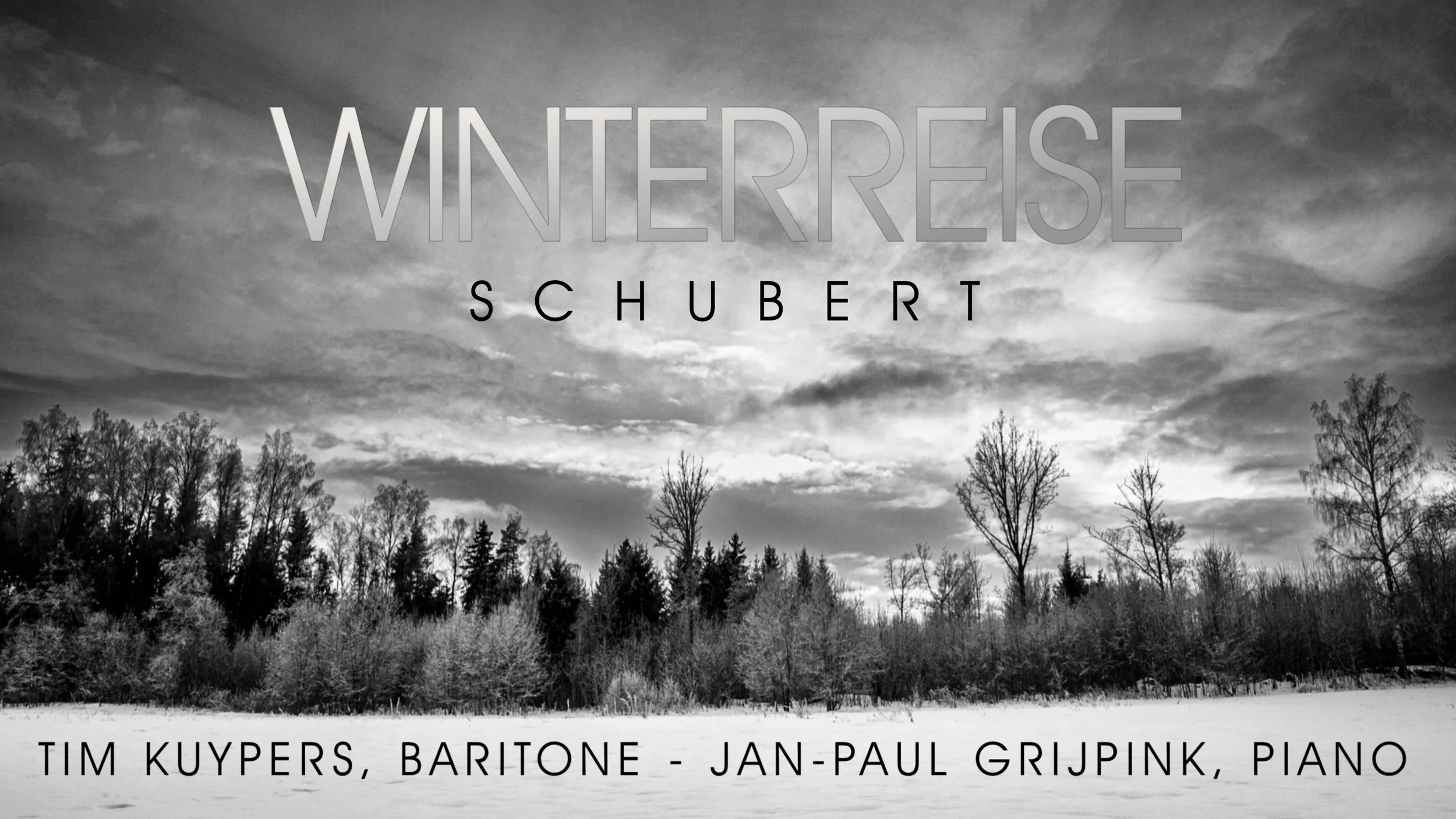
Winterreise by Franz Schubert is one of the most profound and influential song cycles in the history of music. Composed in 1827, just a year before Schubert’s early death, it belongs to the final phase of his creative life. The cycle is based on 24 poems by Wilhelm Müller, which together tell a somber and introspective story about an unnamed wanderer. After a failed love affair, he leaves his beloved’s home and sets out into a bleak winter landscape. His journey is not only physical, but above all psychological—a descent into memory, alienation, and existential despair.
Unlike much Romantic music of the time, in which nature often offers consolation or transcendence, nature in Winterreise is harsh and unyielding, mirroring the wanderer’s inner state. Ice, snow, wind, and darkness are constant companions, intensifying the sense of isolation. Rather than following a conventional dramatic arc, the cycle unfolds as a sequence of psychological snapshots, in which hope and resignation gradually give way to estrangement and inner emptiness. The final song, in which the wanderer encounters a mysterious hurdy-gurdy player, leaves the listener with an open and enigmatic ending.
Musically, Winterreise is remarkable for its restraint and expressive depth. The piano part plays an essential role and is far more than mere accompaniment: it evokes the landscape, suggests movement (such as trudging through snow), and reflects the wanderer’s inner turmoil. Schubert employs subtle harmonies, recurring motifs, and stark contrasts to convey emotions such as despair, nostalgia, and bitterness. The vocal line is direct and often understated, allowing the text to resonate with striking immediacy.
At its first performances, Schubert’s friends were taken aback by the cycle’s bleakness; some even found it excessively dark. Today, however, Winterreise is regarded as a pinnacle of the Romantic Lied repertoire and as a deeply moving exploration of human loneliness and alienation. It demands not only technical mastery from performers, but also profound emotional insight, as its expressive intensity is both intimate and uncompromising.
As a whole, Winterreise can be understood as a timeless meditation on loss, identity, and the search for meaning. It invites the listener on a journey that is both quiet and confronting, and that, despite its melancholy, reveals an extraordinary beauty and universal resonance.